Graco Project Painter Plus vs Magnum X5: Is the X5 Worth the Upgrade?
Same max tip. Same gun. Same 515 tip in the box. So why does one cost more — and when should you pay it?

How we tested
We ran both pumps on the same jobs, back to back: a set of shaker cabinet doors in urethane enamel, a bedroom in flat latex, a hallway of trim, and a 60-foot fence run. Same paint, same day, same 310 FFLP and 515 tips. We watched three things: can you hold a steady low pressure for fine finish, does the pump keep up without surging on a long pass, and how long does cleanup actually take when you are tired at the end of the day.
One correction worth making up front: a lot of roundups — including our own X5 vs X7 guide — say the Project Painter Plus has "fixed pressure." That is wrong. Graco lists its pressure control as Adjustable, and the box says so too. What it does not have is the X5's continuous, fine dial. That distinction is the whole story of this comparison, and we get into it below.
Our picks in detail
Graco Magnum Project Painter Plus
One of the most affordable real Graco piston pumps you can buy, and it is a real pump: stainless steel, sprays unthinned latex, pulls straight from a 1- or 5-gallon bucket. It tops out at 0.24 GPM and 2,800 PSI with a .015 max tip — which covers every wall tip and every cabinet tip you will ever need.
- + The most affordable way into a Graco piston pump
- + Lightest of the two — Graco AU lists the PPP sprayer at 12 lb; retailers list 12–15 lb — carries up stairs one-handed
- + Adjustable pressure, sprays unthinned paint, PowerFlush cleanup
- – Coarse, symbol-based pressure selector — hard to hold an exact low PSI
- – 50 ft max hose; 0.24 GPM runs near its ceiling on long passes
- – Rated for smaller jobs (5-gallon project size) — not an every-weekend machine
Graco Magnum X5 Stand Airless Sprayer
The same .015 max tip and the same SG2 gun — but a bigger motor (1/2 HP vs 3/8 HP), 0.27 GPM, 3,000 PSI, and a continuous variable pressure dial. On a cabinet door, that dial is the upgrade. You can creep up to 1,300 PSI in small steps and stop exactly where the fan goes clean, instead of jumping past it.
- + Continuous variable pressure dial (0–3,000 PSI) — holds low FFLP pressure
- + 0.27 GPM and up to 75 ft of hose for full rooms and two-story work
- + Rated for bigger jobs (10-gallon project size) — more headroom, less strain
- – Heavier (17 lb, Graco product page) and taller — takes more shelf space
- – Zero finish advantage over the Project Painter Plus with the same tip
- – Still ships with a 515 wall tip — budget for the FFLP 310 anyway
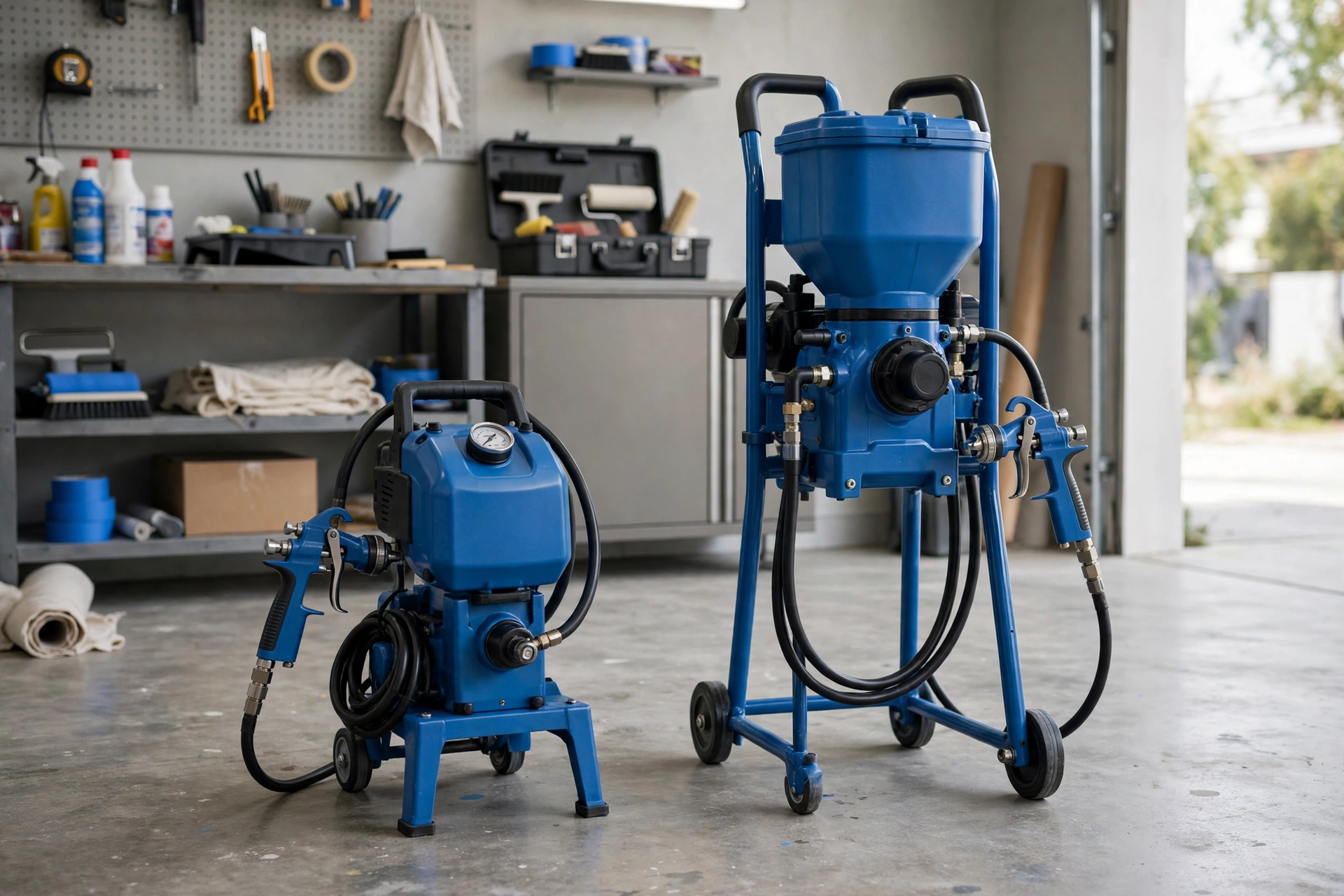
Side by side
| Model number | 257025 | 262800 |
|---|---|---|
| Motor | 3/8 HP | 1/2 HP |
| Flow rate | 0.24 GPM | 0.27 GPM |
| Max pressure | 2,800 PSI | 3,000 PSI |
| Max tip size | .015 in | .015 in |
| Pressure control | Adjustable, symbol-based selector | Continuous variable dial, 0–3,000 PSI |
| Hose in the box | 25 ft DuraFlex | 25 ft DuraFlex |
| Max hose length | 50 ft | 75 ft |
| Weight | ≈12 lb (Graco AU sprayer weight; retailers list 12–15 lb) | 17 lb (Graco product page) |
| Project size (Graco) | Up to 5 gallons | Up to 10 gallons |
| Gun / tip in the box | SG2 gun, RAC IV 515 tip | SG2 gun, RAC IV 515 tip |
| Cleanup | PowerFlush garden-hose adapter | PowerFlush garden-hose adapter |
Specs from Graco's official product pages and Amazon listings. Weight is the one number that disagrees everywhere — Graco publishes sprayer-only weights in its manuals (X5 13.3 lb) and heavier product-page weights (X5 17 lb, X7 27 lb), and retailers list 12–15 lb and 13–19 lb for the same models. We use Graco's current product-page weights consistently, and the PPP's weight is given as the Graco AU sprayer figure with the retailer range. Older Graco manuals list the X5 at 0.24 GPM / 2,800 PSI — a series revision; the current rating is 0.27 GPM / 3,000 PSI.
What the X5 actually buys you — and when it buys you nothing
Here is the honest math. Both pumps push the same .015 tip, so with the same paint and the same tip, the fan on the wall is the same fan. Nobody standing in front of a finished door can tell which pump sprayed it. If a review tells you the X5 "sprays smoother," it is selling you a feeling, not a fact.
What the X5 buys you is three practical things. First, the dial. On the Project Painter Plus you pick a symbol and hope it lands near the pressure you want; on the X5 you turn a dial until the tails disappear on cardboard and then you leave it alone. On cabinets, where the difference between 1,200 and 1,500 PSI is the difference between a glass coat and orange peel, that is real money. Second, headroom. At 0.24 GPM the smaller pump is working near its ceiling on a long wall pass; at 0.27 GPM the X5 is not. Third, reach — 75 ft of hose instead of 50 ft, which matters the moment you are spraying a stairwell or a fence and do not want to drag the pump behind you.
And here is when it buys you nothing: a single room, a single fence, a set of shutters, once. The Project Painter Plus will spray that job exactly as well, and the money you save buys the FFLP 310 tip and the guard, which will improve the finish more than any pump upgrade ever will. Buy the cheap pump and the right tip. That is the painter's answer, not the salesman's.
Setting either one up so it sprays right the first time
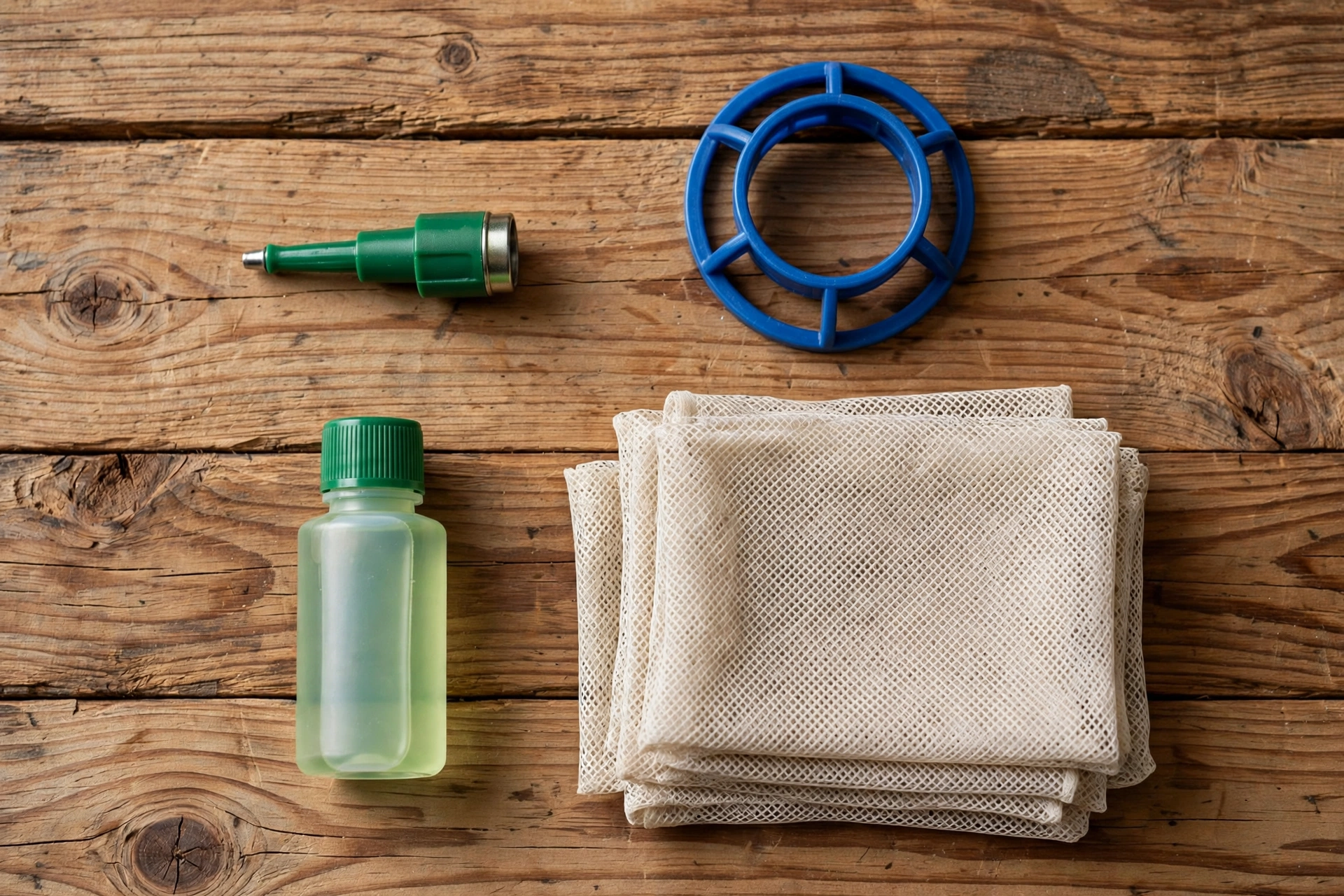
Unbox it, throw the 515 tip in a drawer, and fit the blue RAC X guard with a green FFLP 310 before you spray anything you care about. The 515 is a 10-inch fan at .015 — it is a wall tip, and on a cabinet rail it floods. The 310 is a 6-inch fan through a .010 orifice, and it is the tip both of these pumps were waiting for.
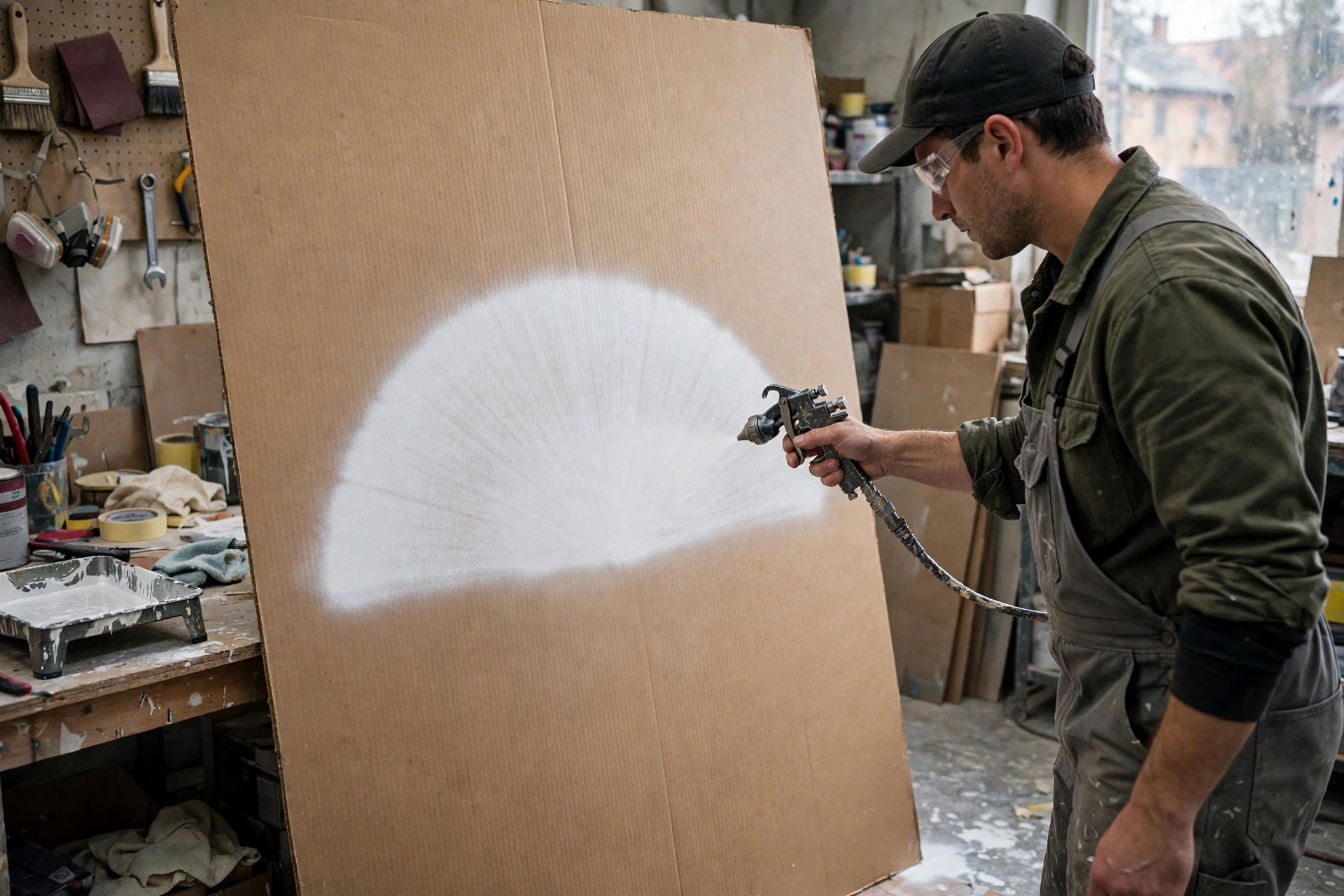
Strain the paint through a mesh bag into the bucket, every gallon, no exceptions. Prime with water, then paint. Hold the gun 10–12 inches from the surface, move before you pull the trigger, release before you stop moving, and overlap each pass by half. Start on cardboard: turn the pressure up in small steps until the heavy lines at the edges of the fan — the tails — disappear. On the X5 that is a small twist of the dial. On the Project Painter Plus, step through the symbols slowly and stop at the first one that gives you a clean fan; do not keep going, because more pressure past that point just makes fog and bounce-back.
For urethane cabinet enamel with a 310 tip, start around 1,100 PSI and work up toward 1,400 PSI. For flat wall latex with a 515 tip, you will be higher — but still start low and add pressure only until the tails go away. That one habit fixes most of the "my sprayer sprays badly" complaints we hear.
When it goes wrong on either pump
Tails on the edges of the fan: pressure too low for that paint, or the paint needs straining. Add pressure in small steps; if the tails stay, strain the gallon and check the tip for wear. A worn tip will tail no matter what you do — that is your sign to replace it, not to crank the dial.
Spitting or a blob when you pull the trigger: usually paint sitting in the tip or a clog starting. Reverse the RAC IV tip, blast it clear, turn it back. If it keeps happening, strain the paint and check the inlet strainer.
Pump runs but will not prime: check the suction tube is fully in the paint, the prime valve is on Prime, and the inlet ball is not stuck — a tap on the inlet housing frees it more often than a teardown does.
Orange peel on cabinets: almost never the pump. It is the wrong tip (that 515 again), pressure too high, or passes laid too heavy. Switch to the 310, drop the pressure, move faster, and let the coat flow out.
Frequently asked questions
Does the Project Painter Plus have adjustable pressure, or is it fixed?
It is adjustable — Graco lists its pressure control type as Adjustable, and the box calls it adjustable pressure. The real difference is the dial itself: the Project Painter Plus uses a symbol-based selector that jumps between settings, while the X5 has a continuous variable dial you can nudge in small steps. That fine control matters at 1,100–1,400 PSI, where an FFLP cabinet tip wants a precise setting, not a rough one.
Will the X5 spray cabinets smoother than the Project Painter Plus?
No — not with the same tip. Both pumps top out at a .015 tip, and both will run a 310 FFLP tip. Finish quality on a cabinet door comes from the tip orifice and the pressure you hold, not from the extra 0.03 GPM or the extra 200 PSI on the X5. The X5 wins on control, hose length, and how hard the pump has to work — not on the fan itself.
When is the X5 NOT worth the upgrade?
If this is a one-weekend job — one room, a fence, a few pieces of furniture — and the sprayer will sit in the garage for a year after that, keep the Project Painter Plus. The X5 earns its keep when you spray several times a year, or when cabinets and trim are the job, because that is where the fine pressure dial and the longer hose actually save you time and rework.
What tip should I buy first for either sprayer?
A green RAC X FFLP 310, plus the blue RAC X HandTite guard to hold it. Both sprayers ship with a 515 tip, which is a wall tip — it floods cabinet rails and trim. The 310 is a 6-inch fan through a .010 orifice, and it is the single cheapest upgrade that changes the finish on either machine.
Can either sprayer pull from a 5-gallon bucket?
Yes. Both have a flexible suction tube that drops straight into a 1- or 5-gallon bucket. The difference is reach: the Project Painter Plus supports up to 50 ft of hose, the X5 up to 75 ft, so on a two-story room or a long fence run the X5 lets you move the gun further from the pump.
More Tool Picks guides
The Sunday Coat
One pro painting technique, one prep fix, one good read. Every Sunday.
The Sunday Coat newsletter signup is coming soon — no email is stored yet. Learn what it will be →